Carbide vs. Bimetal Band Saw Blades — Maximize Your Cutting Strategy
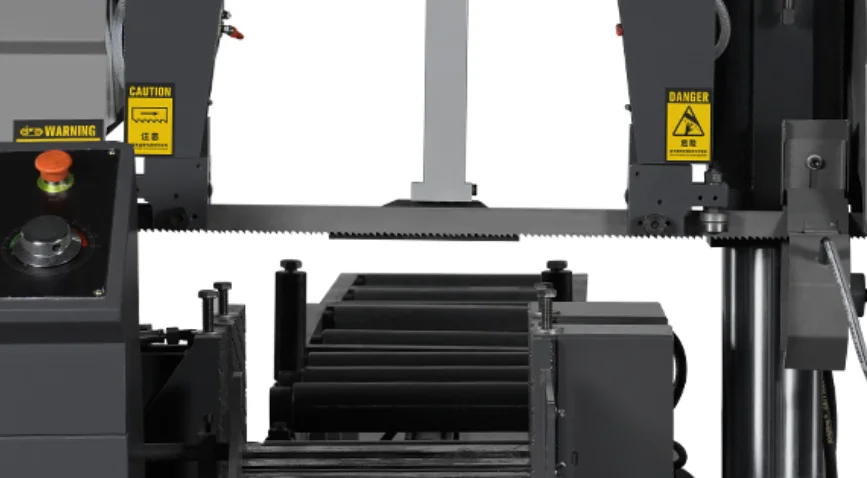
Choosing between bimetal and carbide-tipped band saw blades is a critical decision for metal fabrication shops. Learn how to select the right blade, minimize cost-per-cut, and increase productivity by 300% when cutting alloy steels.
In modern B2B metal fabrication and steel processing, the band saw blade is the primary consumable that determines production throughput. Selecting the wrong blade type or geometry not only leads to premature blade failure but also creates significant bottlenecks in your production line.
Plant managers and procurement teams often struggle with the core question: Should we invest in premium carbide-tipped blades, or stick with versatile bi-metal blades?
To make an informed decision that minimizes your cost-per-cut, we must examine the metallurgy, performance limits, and economic trade-offs of both options.
1. Metallurgy and Construction: What Sets Them Apart?
The performance difference between bi-metal and carbide-tipped blades is rooted in their material science.
Bi-Metal Blades
A bi-metal blade consists of two distinct metals joined together:
- Backing Material: A high-strength, spring-tempered alloy steel backing that provides excellent fatigue resistance and flexibility to withstand repeated bending around the bandsaw wheels.
- Tooth Edge: A narrow strip of High-Speed Steel (typically M42 containing 8% cobalt, or M51 containing 10% cobalt) electron-beam welded to the backing. The teeth are then ground and heat-treated to a hardness of approximately 68-69 HRC.
Carbide-Tipped Blades
Instead of a continuous high-speed steel edge, a carbide-tipped blade features:
- Backing Material: A specialized, high-alloy steel backing designed to handle the extreme tension and heat generated by high-velocity cutting.
- Tooth Tips: Individual pockets are precision-ground into the backing, and pocket-sized tungsten carbide (WC) tips are individually brazed into these pockets. The carbide tips are then ground to specific tooth geometries (such as triple-chip or trapezoidal configurations) and hardened to over 75-80 HRC.
2. Technical Performance Comparison
The extreme hardness of tungsten carbide allows it to maintain a sharp cutting edge at temperatures that would instantly soften high-speed steel. Let’s compare their operational parameters:
| Performance Metric | Bi-Metal (M42 / M51) Blades | Carbide-Tipped Blades |
|---|---|---|
| Edge Hardness | ~68 HRC | ~78 - 80 HRC |
| Max Cutting Speed (Carbon Steel) | 60 - 90 m/min | 100 - 180+ m/min |
| Thermal Resistance | Up to 600°C | Up to 1000°C |
| Average Tool Life Ratio | 1.0 (Baseline) | 3.0x to 5.0x higher |
| Primary Failure Mode | Tooth wear, tooth strippage | Chipping from impact/vibration |
| Blade Tension Required | 25,000 - 30,000 PSI | 32,000 - 38,000 PSI |
3. Materials Matching: When to Choose Which Blade
Selecting the right blade depends heavily on the grade and shape of the metal being cut.
When to Choose Bi-Metal Blades
Bi-metal blades are the workhorses of the metalworking industry due to their toughness, flexibility, and resistance to shock.
- Structural Shapes & Bundles: Angle iron, channels, tubes, and H-beams are prone to vibration and movement during cutting. The elastic backing of bi-metal blades absorbs these shocks, preventing tooth strippage.
- Interrupted Cuts: When cutting tubes or shapes with variable cross-sections, a bi-metal blade is less likely to chip when transitioning from air to metal.
- General Purpose Fabrication: For workshops processing a wide range of standard carbon steels and mild alloys throughout the day, bi-metal offers the most cost-effective and forgiving performance.
When to Choose Carbide-Tipped Blades
Carbide is extremely hard but brittle. It requires a rigid machine and stable cutting conditions, but excels in high-demand environments.
- Exotic Alloys & Superalloys: Titanium, Inconel, Monel, Hastelloy, and nickel-based alloys work-harden rapidly. Carbide blades slice through these before they can work-harden.
- Case-Hardened & Tool Steels: Materials like D2, H13, and induction-hardened shafts are too abrasive for bi-metal blades, which dull almost instantly.
- Large Solid Billets: Slicing solid steel cylinders or heavy forge blocks requires long, continuous cuts where heat build-up is extreme. Carbide’s thermal resistance ensures straight cuts and minimal taper.
- High-Production Facilities: In automotive parts plants or steel service centers where cycle times are tracked in seconds, carbide’s ability to run at triple the speed of bi-metal makes it the only viable choice.
4. Cost-Per-Cut Economics: Calculating the True ROI
A common purchasing mistake is evaluating blades based solely on their initial acquisition price. Carbide-tipped blades typically cost 3 to 4 times more than high-quality bi-metal blades. However, looking at the cost-per-cut reveals a different story.
Case Study: Cutting Solid 4140 Alloy Steel Bars (Ø 200 mm)
Let’s analyze the cost differences over a production run of 1,000 cuts:
| Cost & Efficiency Parameters | Scenario A: Bi-Metal Blade (M42/M51) | Scenario B: Carbide-Tipped Blade | Saving / Benefit |
|---|---|---|---|
| Unit Blade Cost | $120 | $420 | - |
| Average Blade Lifespan | 100 cuts | 500 cuts | 5x longer life |
| Blades Consumed (for 1,000 cuts) | 10 blades | 2 blades | 8 fewer blades |
| Total Consumable Cost | $1,200 | $840 | $360 saved (30% off) |
| Average Cutting Time | 8.0 minutes | 2.5 minutes | 5.5 mins faster per cut |
| Total Machining Time (1,000 cuts) | 133.3 hours | 41.7 hours | 91.6 hours saved |
| Total Machine Labor Cost (at $40/hr) | $5,333 | $1,667 | $3,666 saved |
| Total Processing Cost | $6,533 | $2,507 | $4,026 saved (61.6% reduction) |
Net Savings: $4,026 (61.6% Reduction in Total Processing Cost)
By investing in a premium carbide blade, the B2B fabricator not only saved on direct consumable costs (fewer blades used) but also reclaimed 91 hours of machine capacity, allowing the shop to take on more jobs.
5. Machine Requirements for Carbide Success
It is crucial to note that running a carbide blade on a worn, lightweight, or low-tension bandsaw is a recipe for disaster. The brittle nature of carbide means any vibration or frame deflection will instantly chip the teeth, ruining a $400+ blade.
To successfully run carbide blades, your band saw machine must have:
- High-Rigidity Gantry Frame: A heavy-duty, double-column structure (like the RAXMEKBANDSAW BS-CNC series) that minimizes frame vibration and twisting.
- Robust Hydraulic Tensioning: The ability to consistently maintain 35,000+ PSI blade tension to prevent blade deflection under heavy feed forces.
- VFD Speed Control: The ability to tune linear speeds with 1 m/min precision to avoid critical resonant frequencies that cause chatter.
- Closed-Loop Feed Control: A system that senses cutting resistance and dynamically slows down the feed if it encounters hard spots, protecting the carbide tips from impact damage.
Optimize Your Cutting Strategy with RAXMEKBANDSAW
At RAXMEKBANDSAW, we don’t just manufacture premium CNC band saws—we help you engineer your entire cutting process. Our technical consultation team is ready to analyze your material mix, production targets, and current machinery to recommend the exact blade material, tooth pitch, and parameter settings to maximize your shop’s profitability.
Contact a RAXMEKBANDSAW engineer today for a free B2B consultation and custom cost-per-cut analysis.
موارد ذات صلة
Technical Challenges and Solutions for Large-Capacity Gantry Band Saws
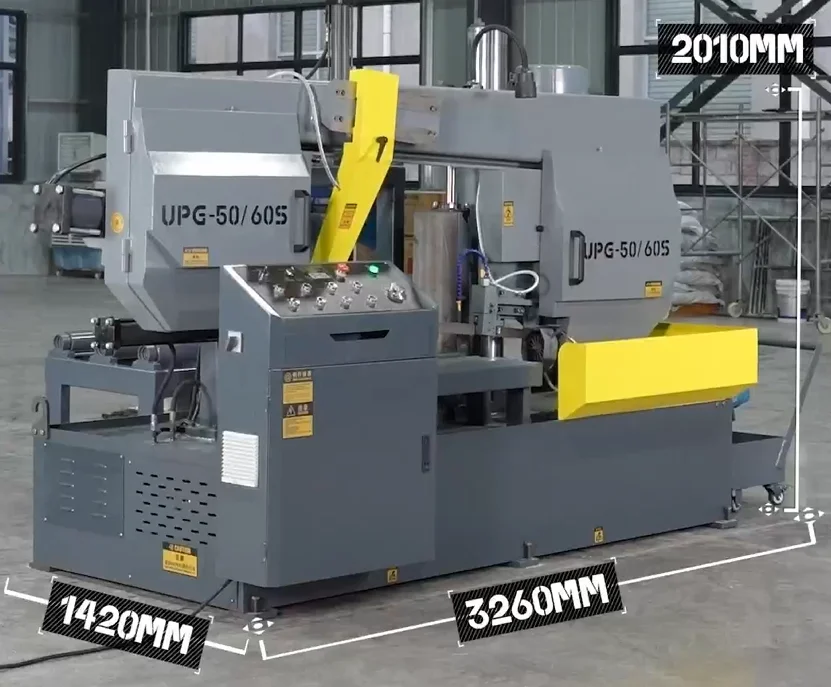
Heavy-duty steel sawing requires massive, highly rigid machines. Learn about the key technical challenges in large-capacity gantry band saws—from vibration damping to active feed rate modulation—and how modern engineering solves them.
CNC Band Saw Machine – Enhance Your Cutting Performance with VFD Gearmotor Drives or Hydraulic Servo Feed Systems
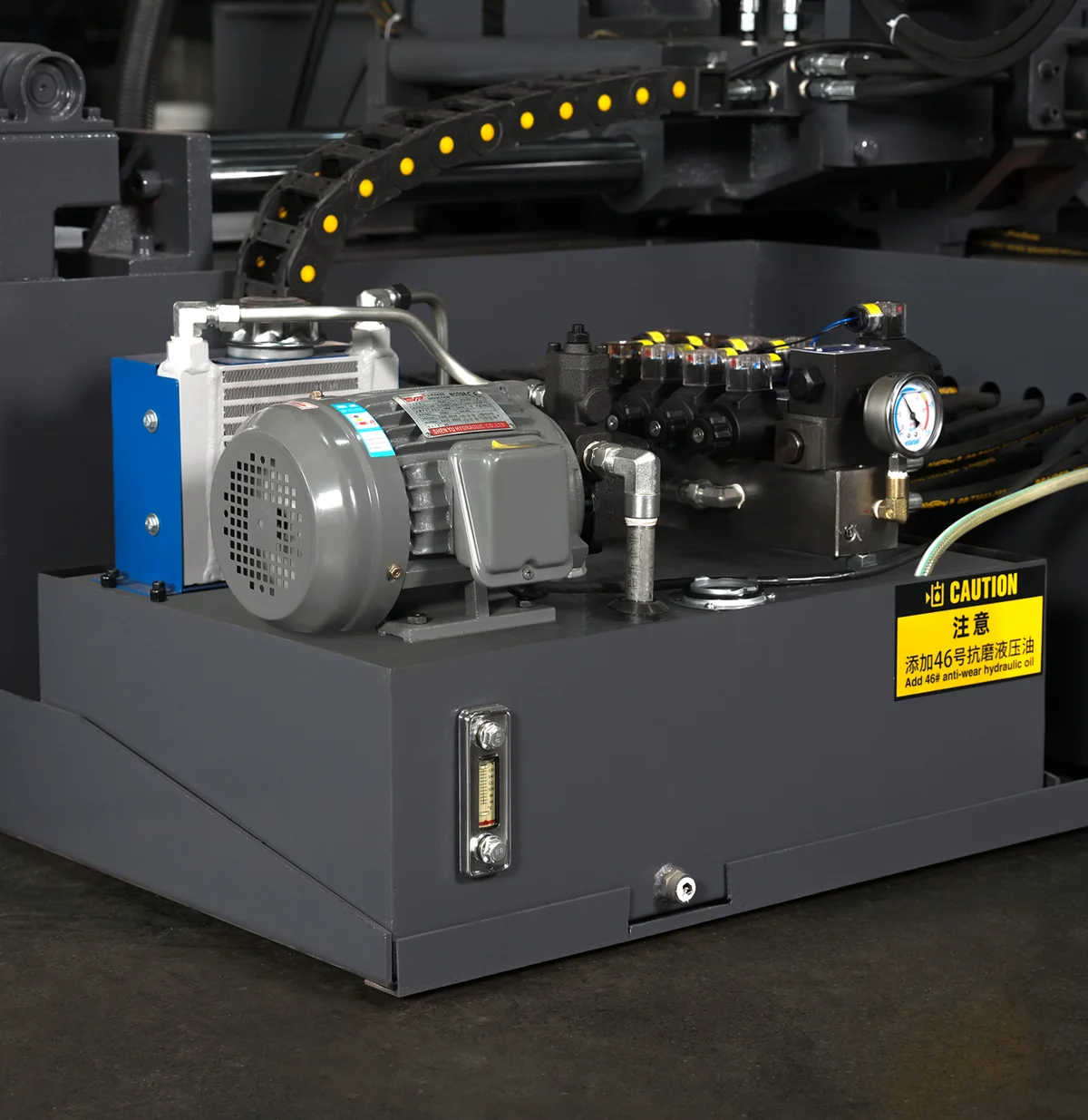
A CNC band saw machine is one of the most advanced and efficient technologies used in modern metal fabrication. In simple terms, it utilizes computerized control for automatic, high-precision sawing of heavy metals, profiles, and structural sections.
Evolution of Core Equipment and Technologies for Circular Metal Saws
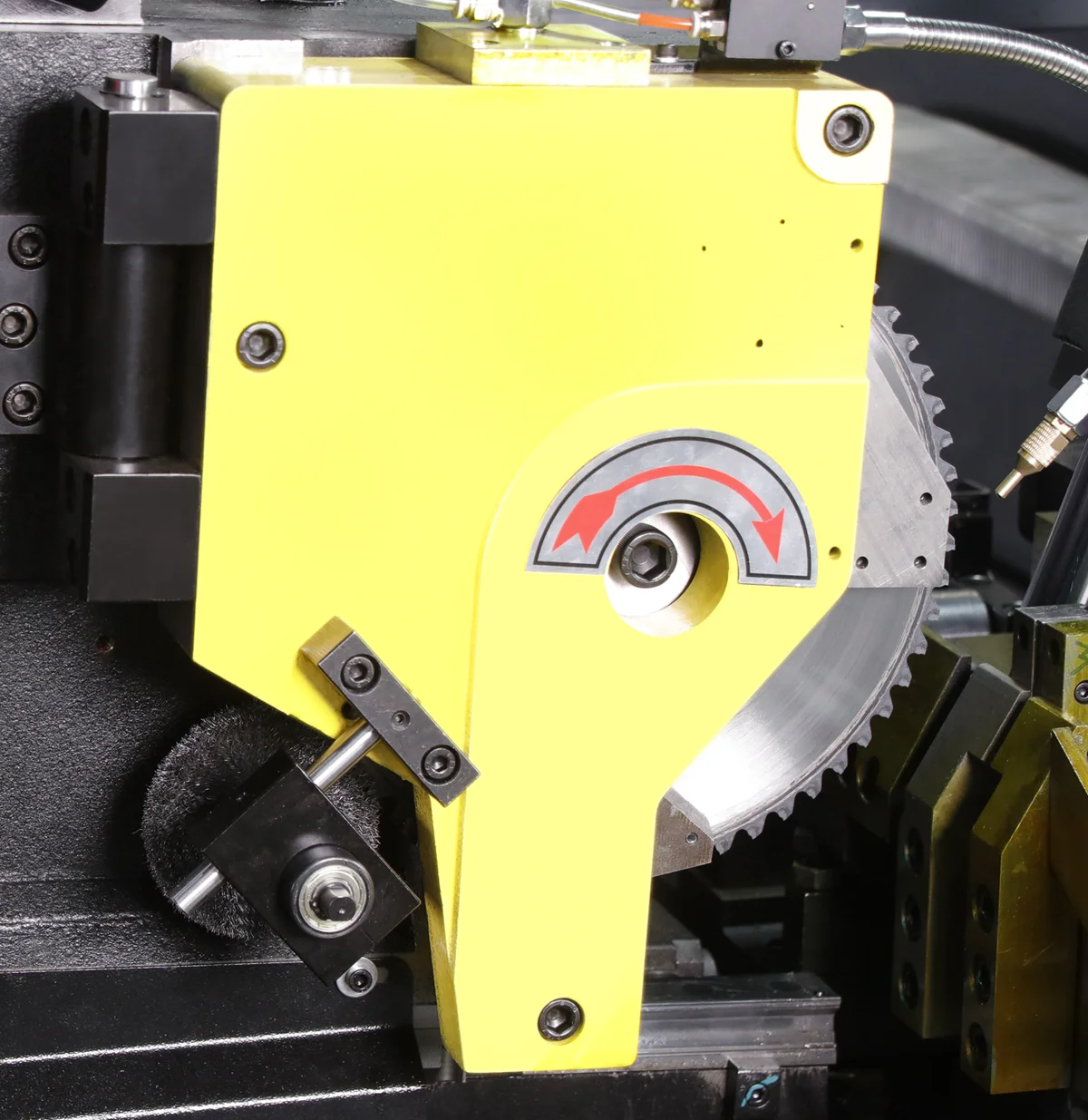
Explore the technological shift from legacy manual saws to advanced high-speed automatic carbide circular sawing cells. Understand the design principles and ROI of the RAXMEKBANDSAW C-75 circular metal saw.