CNC Band Saw Machine – Enhance Your Cutting Performance with VFD Gearmotor Drives or Hydraulic Servo Feed Systems
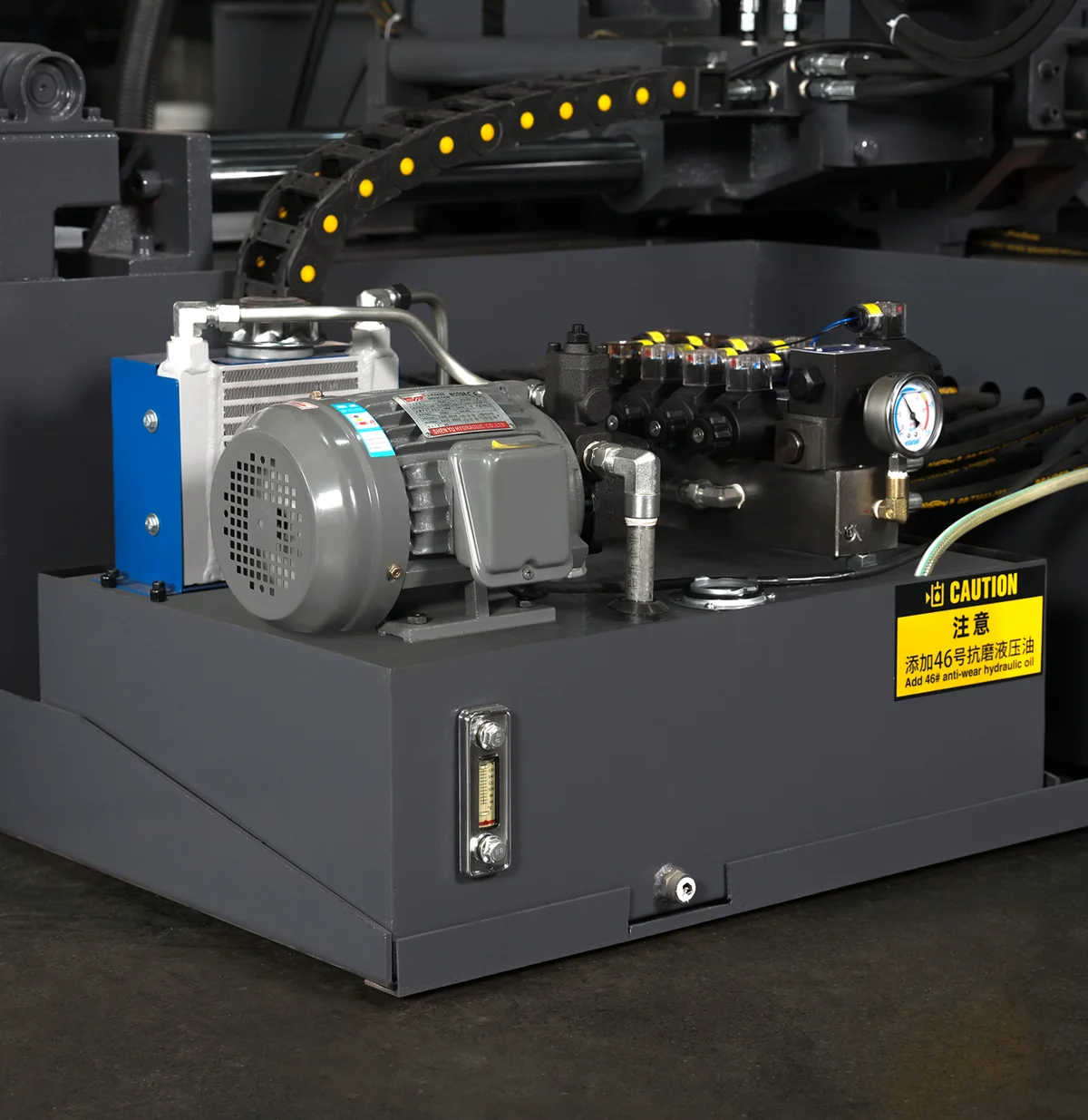
The most important criteria for metal bandsaws and circular saws are high cutting speed, feed precision, and blade stability. The band saw blade's linear drive and the cutting feed rate are controlled electrically via VFDs or hydraulically via servo valves.
In heavy-duty industrial metal sawing, the performance and reliability of the blade drive system directly dictate the machine’s throughput and cost-per-cut. The spindle drive system on a premium CNC band saw machine is responsible for delivering constant torque to the driving band wheel, which in turn rotates the bi-metal or carbide-tipped band saw blade. Modern manufacturing setups are rapidly moving away from legacy mechanical systems in favor of advanced Variable Frequency Drive (VFD) gearmotor units.
High-Performance Blade Drive: VFD Gearmotor Drive Unit
1. Technical Explanation of the VFD Gearmotor Mechanism
Unlike traditional fixed-speed motors, a VFD-controlled blade drive employs a three-phase AC induction motor coupled with an electronic variable frequency inverter. The VFD inverter dynamically regulates the frequency (Hz) and voltage supplied to the motor, enabling step-less speed control of the bandsaw blade from 15 to 120 m/min (meters per minute).
To translate high motor RPMs into the massive torque required to slice through solid metals, a high-efficiency helical-bevel gear reducer is direct-coupled to the motor shaft. Helical-bevel gearboxes deliver up to 96-98% mechanical efficiency, which is significantly higher than traditional worm gearboxes (which lose 15-30% of energy as friction-induced heat). This direct-drive gear coupling eliminates belts entirely in the primary transmission, preventing rotational slippage, reducing backlash, and providing linear speed stability under extreme loads.
2. Real-World Applications & Materials Matching
Optimizing linear blade speed is critical for balancing cutting time and blade longevity. Harder alloys generate extreme friction-induced heat, requiring slower blade speeds and higher downward pressure, while softer metals require high linear speeds to eject chips quickly and prevent material welding. The RAXMEKBANDSAW VFD gearmotor drive allows operators to dynamically adjust blade speeds with single-digit precision directly from the PLC touchscreen:
| Material Type / Grade | Recommended Speed ($V_c$) | Cutting Characteristics & Critical Warnings |
|---|---|---|
| Exotic Superalloys (Titanium Ti-6Al-4V, Inconel 718) | 15 - 25 m/min | Slow speeds prevent rapid thermal failure and extreme heat concentration on carbide tips. |
| Tool Steels & Mold Materials (D2, H13, P20) | 25 - 45 m/min | Requires high torque, slow velocity, and heavy chip loads to chip off abrasive structures. |
| Stainless Steels (Grade 304, 316) | 35 - 55 m/min | Continuous feed at medium speed prevents work hardening on the shear surface. |
| Carbon Steels & Structural Profiles (A36, S355JR) | 60 - 90 m/min | Standard range for high-efficiency bulk processing. |
| Non-Ferrous Metals (Aluminum, Copper Alloys) | 90 - 120+ m/min | High-velocity cutting to prevent chips from melting or welding to the tooth gullets. |
On legacy belt-pulley machines, shifting speed required stopping the machine, loosening tension bolts, physically repositioning heavy V-belts across pulleys, and retensioning. In B2B environments processing variable material batches, this manual adjustment wasted up to 20 minutes per setup and led to operators running incorrect speeds to save time, resulting in premature blade strip-out.
3. Comparison with Traditional Systems
- Belt Pulley Fixed-Speed Systems: Typically limited to 3 or 4 stepped speeds (e.g., 25, 45, 65, 80 m/min). If the optimal cutting speed for a specific alloy steel block is 35 m/min, the operator must either choose 25 m/min (causing a 28% loss in productivity) or 45 m/min (which overheats the blade gullets, stripping carbide tips within hours).
- Mechanical Variable-Speed Variators: These systems use split-sheave pulleys and adjustable belts. They suffer from high mechanical wear, frequent belt slippage under heavy torque load, and require rebuilds every 12 to 18 months in production shops.
- VFD Gearmotor Direct Drive: Offers continuous, stepless velocity tuning. Direct-shaft coupling ensures that motor torque is transmitted with zero loss, and soft-start ramps protect the motor windings from voltage spikes during initial engagement.
4. Quantifiable Customer Benefits
- Productivity Increase: Boosts cutting throughput by up to 35% by running at the precise optimal cutting speed for each specific steel grade.
- Blade Lifespan Extension: Direct gear torque delivery eliminates belt-slip vibration, reducing blade wear by 40% and preventing micro-chipping of carbide tips.
- Energy Efficiency: Operating with a direct helical-bevel reducer and VFD soft-starts reduces start-up surge currents and power factor losses, cutting electricity consumption by 25-30% compared to direct-on-line (DOL) belt drives.
- Better Surface Finish: Smooth, vibration-free blade rotation produces a clean surface finish (Ra < 6.3 μm), eliminating the need for post-cut milling or grinding on structural flanges.
Hydraulic Servo Feed System
While blade speed controls the linear chip shearing action, the downward feed rate determines the depth of cut per tooth, also known as the chip load. In modern high-capacity sawing, a hydraulic servo feed system is the gold standard for controlling the downward progression of the saw frame. RAXMEKBANDSAW has engineered a closed-loop servo-hydraulic feed system that dynamically modulates both downward force and feed velocity to achieve optimal cutting dynamics.
1. Technical Explanation of the Closed-Loop Servo Downfeed
At the core of the RAXMEKBANDSAW hydraulic servo feed system is a high-speed proportional flow control valve (servo valve) coupled with a high-resolution magnetic or glass-scale linear encoder mounted directly on the saw frame columns. The linear encoder monitors the exact vertical position and velocity of the saw head in real-time, providing feedback to the main PLC at a frequency of 250 Hz (250 readings per second).
During cutting, the controller calculates the Constant Chip Load. The chip load per tooth (hz) is defined by the formula:
hz = (vf × p) / vc
hz: Chip load per tooth (mm/tooth)
vf: Downward feed rate (mm/min)
p: Tooth pitch (mm/tooth)
vc: Linear blade speed (m/min)
To keep the chip thickness constant, the PLC must adjust the downward feed speed (vf) dynamically as the blade encounters different cross-sectional areas. For example, when cutting an H-beam (universal beam), the blade first cuts through the wide top flange (slow feed rate, high downward pressure), then enters the thin vertical web (very fast feed rate, lower pressure), and finally enters the bottom flange (slow feed rate again). The servo valve modulates the hydraulic oil flow to the rod-end of the downfeed cylinder, shifting feed velocity in milliseconds to match this profile.
2. Real-World Applications: Structural Profile Cutting
Consider a steel fabrication plant cutting large H-beams (e.g., HEB 500) for structural bridge supports. The cross-section changes drastically during the cut. On a traditional gravity-feed or manual hydraulic saw, the operator must set a slow, conservative feed speed to ensure the blade does not crash or bind when entering the thick flanges. Consequently, the saw crawls through the thin web section at the same slow speed, wasting hours of production time.
With the RAXMEKBANDSAW hydraulic servo feed bandsaw, the controller detects the drop in resistance as the blade enters the web and automatically increases the downward velocity. Upon reaching the bottom flange, the system instantly throttles back the feed to prevent blade impact. This automatic adjustment is critical in preventing blade runout (crooked cuts) which is a common reason B2B clients reject steel structural sections.
3. Comparison: Servo-Hydraulic vs. Conventional Hydraulic Valves
- Conventional Needle Valves (Manual Throttle): These valves rely on the manual turn of a knob by the operator. Because they are open-loop, they cannot adapt to changing material shapes. Furthermore, hydraulic oil viscosity drops as the machine warms up (temperature rises from 20°C to 55°C), causing the feed rate to drift and speed up automatically, which often leads to tooth stripping.
- RAXMEKBANDSAW Closed-Loop Servo-Hydraulic Feed: Fully automated. The system automatically compensates for oil temperature fluctuations by reading the actual frame speed from the linear encoder and adjusting the proportional valve to maintain the targeted feed velocity. It removes operator guesswork entirely.
4. Quantifiable Customer Benefits
- Sawing Cycle Time Reduction: Reduces structural H-beam and tube bundle cutting time by 45-50% by accelerating through thin-wall sections.
- Zero Speed Drift: Maintains feed rate accuracy within ±1.5% throughout an 8-hour production shift, regardless of hydraulic oil temperature rise.
- Lower Scrap Rates: Prevents blade deflection under load, keeping cut perpendicularity within 0.1 mm per 100 mm of cut height, saving thousands of dollars in wasted structural steel profiles.
Advantages of Hydraulic Servo Feed Compared to Traditional Hydraulic Controls
B2B manufacturing plants, steel service centers, and custom fabrication shops operate on tight margins where machine uptime and consumable costs are critical. To illustrate why upgrading to a closed-loop hydraulic servo feed bandsaw is financially and operationally superior to buying traditional manual flow-control saws, let us look at the technical advantages and direct cost implications.
1. Advanced PID Closed-Loop Control & Pressure Transducers
Traditional bandsaws measure nothing during the cut; they simply push oil through an orifice. The RAXMEKBANDSAW servo-hydraulic bandsaw utilizes dual hydraulic pressure transducers placed on both the cap-end and rod-end of the feed cylinder. This allows the PLC to calculate the net cutting force acting on the blade wheel.
By running a closed-loop PID (Proportional-Integral-Derivative) algorithm, the system continuously matches the actual cutting force against a pre-programmed threshold. If the blade hits a hard spot (such as a carbide inclusion in a cast ingot or work-hardened stainless steel), the PID loop instantly decreases the feed speed to protect the teeth, then ramp it back up once the hard spot is passed. This active blade protection is absent in manual flow valves.
2. High-Rigidity Dual-Column Gantry Structure
To support the precision of the servo downfeed, RAXMEKBANDSAW bandsaws utilize a heavy-duty double-column gantry frame. The saw frame is guided along ground linear guide rails with recirculating ball bearings instead of cast-iron dovetail slides. This design eliminates stick-slip friction, prevents frame twisting, and ensures that the downfeed force is distributed evenly across the entire cutting width.
3. Technical Comparison: Servo-Hydraulic vs. Traditional Flow-Control
To assist B2B procurement managers and plant engineers in making informed equipment decisions, the table below highlights the performance metrics of the two systems:
| Technical Parameter | RAXMEKBANDSAW Servo-Hydraulic Feed System | Traditional Flow-Control Valve System |
|---|---|---|
| Control Mechanism | Closed-Loop PID with Linear Encoder & Proportional Valve | Open-Loop Manual Needle Orifice Valve |
| Feed Rate Accuracy | ±1.0% (Sensor Monitored) | ±15% to 25% (Drifts with Oil Temp) |
| Response Time | < 10 ms (Active Blade Protection) | No automatic response (manual intervention only) |
| Cutting Force Monitoring | Real-time via dual pressure transducers | None |
| Vibration Damping | High-rigidity linear rails + servo pressure control | Dovetail guides with prone chatter vibration |
| Average Blade Lifespan | 150 - 200 hours of cutting time | 70 - 100 hours of cutting time |
| Tolerance (HEB 400) | ≤ 0.4 mm total deviation | ≥ 1.2 mm deviation (requires machining) |
4. Resolving B2B Paint Points: Financial Impact
In high-volume B2B manufacturing, the cost of band saw blades and material scrap can quickly exceed the initial purchase price of the machine. The RAXMEKBANDSAW servo-hydraulic feed system directly solves these challenges:
- Reduced Consumable Costs: Standard bi-metal bandsaw blades cost between $80 and $150 each, while carbide-tipped blades can cost over $350. By doubling blade life (from 80 hours to 160+ hours) through active pressure monitoring and chip load control, a shop running two shifts can save $8,000 - $12,000 per machine annually in blade replacement costs alone.
- Elimination of Secondary Operations: A crooked cut on a heavy structural steel column means the piece must be scrap-reprocessed or moved to a radial milling machine to square the face. By holding tolerances under 0.1 mm/100 mm, RAXMEKBANDSAW machines deliver "straight-to-weld" cuts, saving substantial shop labor hours.
- Operator Independence: Because the feed rates are programmed into the CNC controller for each material class, you no longer rely on the "touch" of an experienced operator. A junior operator can safely run the machine without risking expensive blade strip-outs.
Strategic Impact on B2B Operations & Technical Consultation
Investing in industrial cutting machinery requires looking beyond the initial sticker price to evaluate total cost of ownership (TCO) and return on investment (ROI). In modern metal fabrication, the sawing department is often the primary bottleneck. If your saws are slow, crooked, or frequently offline for blade changes, your entire production line—welding, assembly, painting, and shipping—slows down.
1. Calculating B2B Return on Investment (ROI)
For a mid-sized steel fabrication plant processing 5,000 tons of structural steel profiles and solid bars annually, upgrading from standard manual hydraulic saws to a premium RAXMEKBANDSAW CNC bandsaw machine with a VFD gearmotor and servo-hydraulic downfeed yields clear financial paybacks:
- Labor Efficiency: Automatic material feeding, bundle clamping, and programmed cut cycles mean one operator can comfortably manage three RAXMEKBANDSAW saws simultaneously, reducing labor costs by 66%.
- Scrap Reductions: Reducing material kerf loss and crooked cuts on expensive alloy stocks (like tool steels and shafts) saves an average of 1.5% in raw steel weight, equating to tens of thousands of dollars in material recovery.
- Increased Capacity: Reducing cutting cycles by 45% allows shops to bid on larger structural contracts and meet shorter lead times, directly boosting top-line revenue.
2. RAXMEKBANDSAW: Engineered for Rigid Performance
As an established, ISO 9001 and CE-certified industrial band saw manufacturer, RAXMEKBANDSAW does not compromise on build quality. Every gantry frame is stress-relieved in furnace systems to prevent structural deflection over decades of service. We use premium hydraulic components, high-torque helical-bevel gear drives, and state-of-the-art PLC touchscreen control systems to ensure that your machinery remains online and highly accurate in the most demanding heavy-duty environments.
3. Contact RAXMEKBANDSAW’s Engineering Team Today
Whether you are upgrading an existing fabrication facility, expanding a steel service center, or processing challenging alloys in an automotive or aerospace tooling shop, RAXMEKBANDSAW is here to help you optimize your cutting performance.
We invite you to contact our engineering support team for a professional consultation. Our experts can assist you with:
- Custom Machine Recommendations: Selecting the optimal bandsaw capacity and configuration (horizontal, gantry, miter angle, or circular saw) for your specific workflow.
- Material Test Cuts: Send us your toughest material samples, and we will perform test cuts in our state-of-the-art laboratory, providing you with exact cycle times, blade wear statistics, and surface finish readouts.
- Requesting a Detailed Quotation: Receive a comprehensive, transparent B2B quotation including detailed specifications, delivery timelines to your port of choice, and custom bundle-clamping or automatic loading table options.
Contact RAXMEKBANDSAW today to take control of your cutting precision and maximize your workshop productivity.
موارد ذات صلة
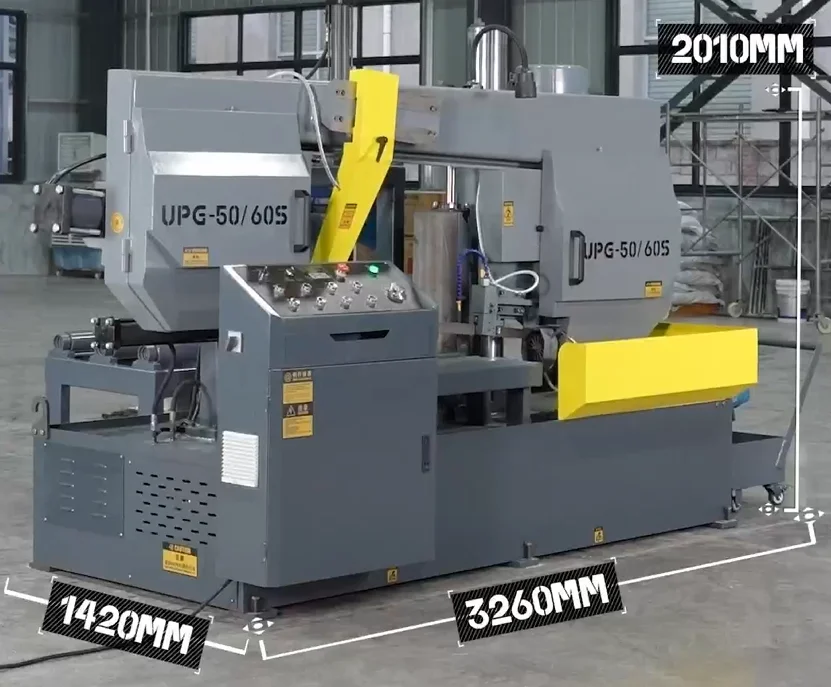
Technical Challenges and Solutions for Large-Capacity Gantry Band Saws
Heavy-duty steel sawing requires massive, highly rigid machines. Learn about the key technical challenges in large-capacity gantry band saws—from vibration damping to active feed rate modulation—and how modern engineering solves them.
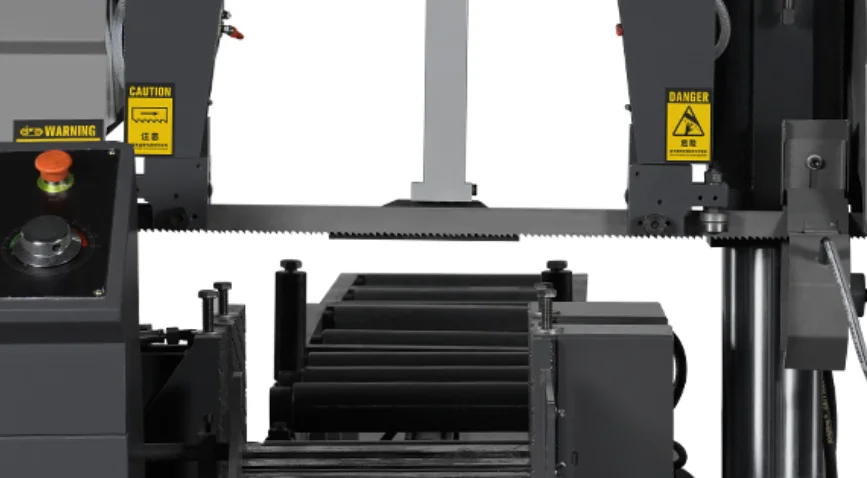
Carbide vs. Bimetal Band Saw Blades — Maximize Your Cutting Strategy
Choosing between bimetal and carbide-tipped band saw blades is a critical decision for metal fabrication shops. Learn how to select the right blade, minimize cost-per-cut, and increase productivity by 300% when cutting alloy steels.
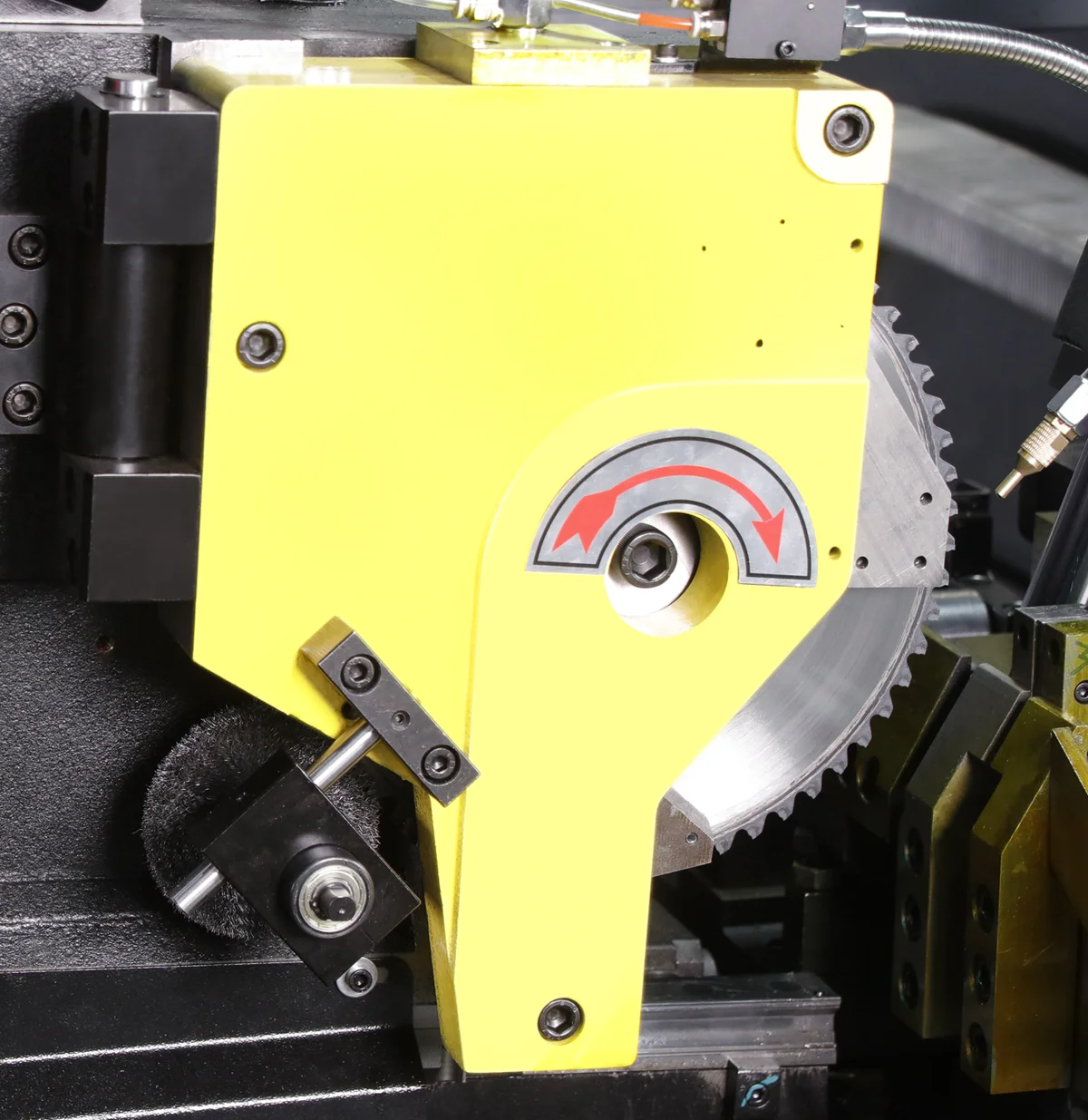
Evolution of Core Equipment and Technologies for Circular Metal Saws
Explore the technological shift from legacy manual saws to advanced high-speed automatic carbide circular sawing cells. Understand the design principles and ROI of the RAXMEKBANDSAW C-75 circular metal saw.